Chinese music (yinyue, 音乐) is among the most ancient continuous musical traditions in the world. Its highest ceremonial form was yayue (雅乐), the "elegant music" of the Confucian court — solemn, stately, performed at sacrifices and state rites to harmonize the emperor, the people, and heaven itself. Confucius regarded music as inseparable from moral cultivation: a well-ordered sound reflected a well-ordered soul, and a well-ordered soul reflected a well-ordered state. To make sense of this vast world of sound, the ancients devised a classification as old as the music itself — the bayin (八音), the "eight sounds," which grouped every instrument by the material that produced its tone: metal (金, bells and gongs), stone (石, chimes), silk (丝, the plucked and bowed strings), bamboo (竹, the flutes), gourd (匏, the sheng), clay (土, the ocarina), leather (革, the drums), and wood (木, the percussive clappers). The ten instruments below span almost all of these categories — and together they tell the story of how China learned to sing.
The Instruments
丝竹八音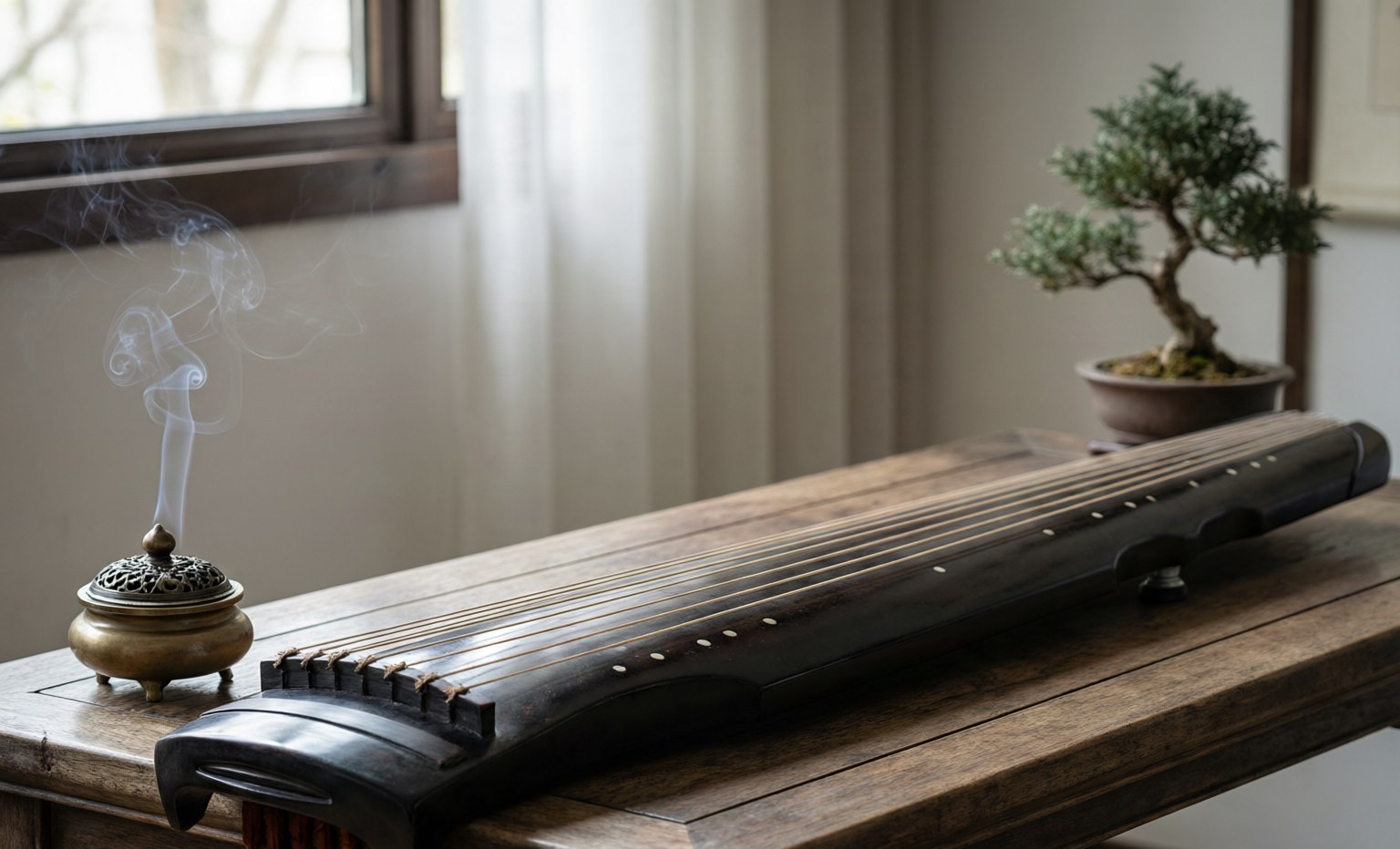 Silk · 丝
The instrument of sages and literati — quiet, profound, and three thousand years old.
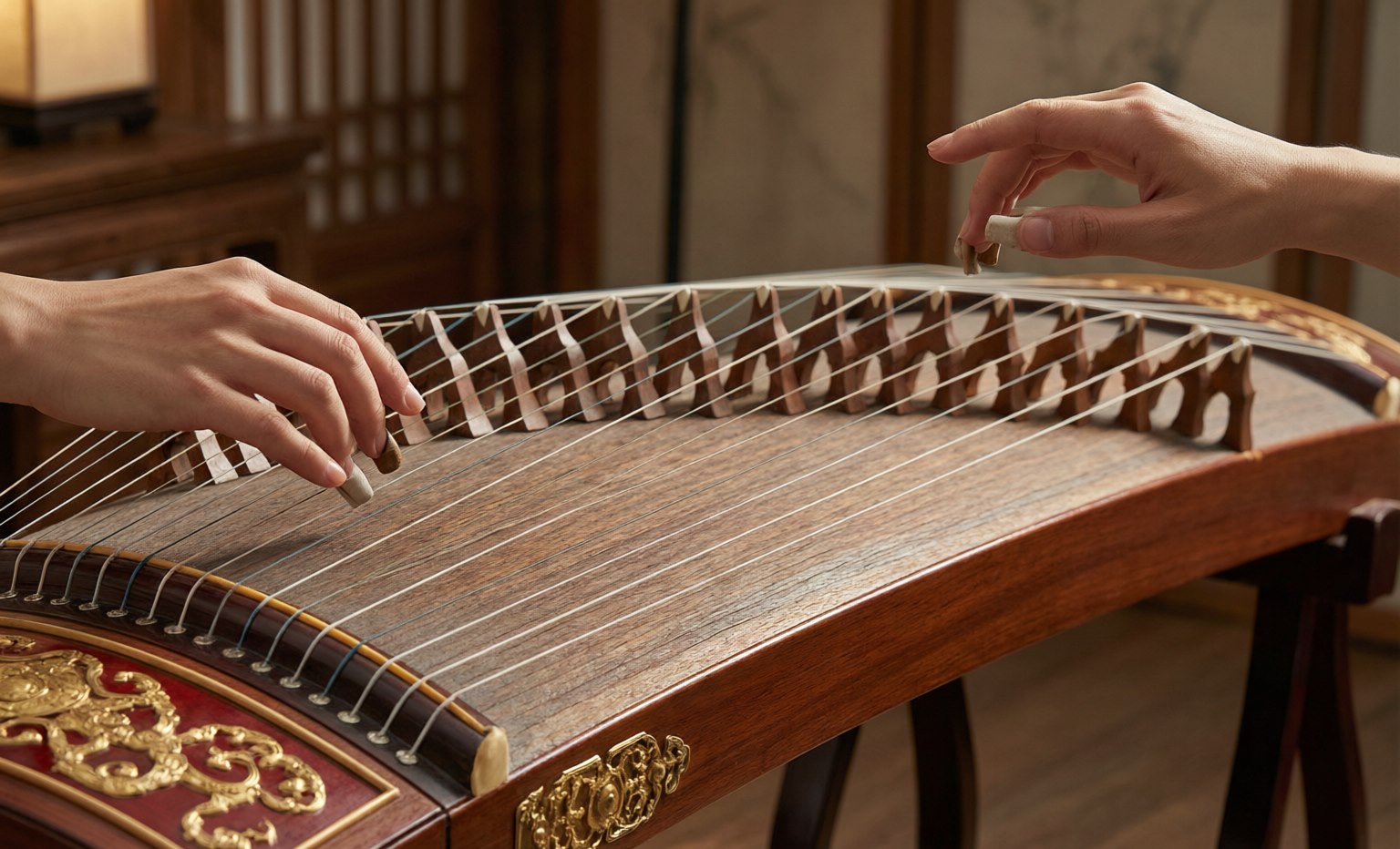 Silk · 丝
Bright, cascading, and instantly recognizable — China's most popular plucked instrument.
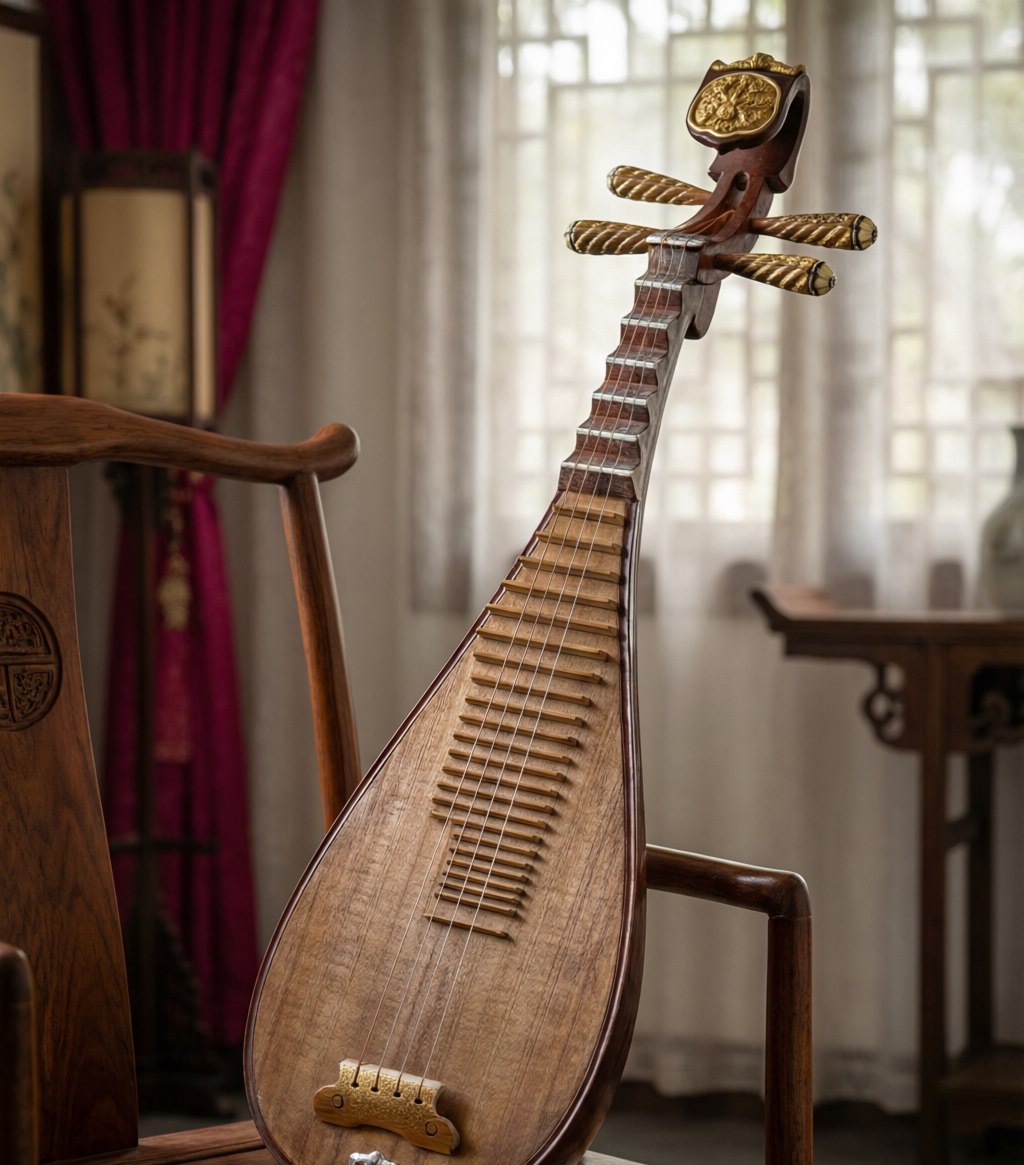 Silk · 丝
A Silk Road traveler that became China's most expressive solo lute.
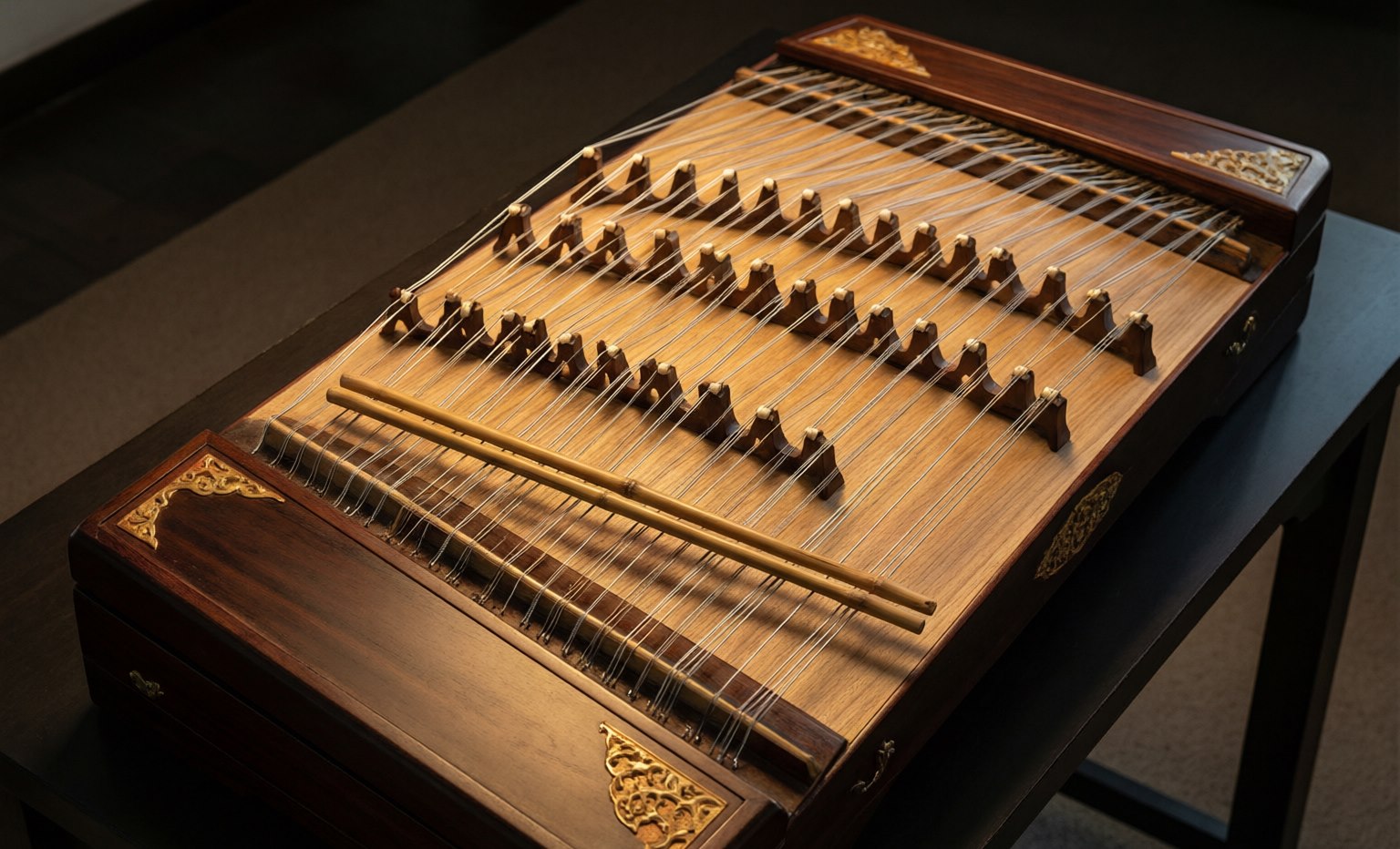 Silk · 丝
A Persian import that became the backbone of the Chinese ensemble.
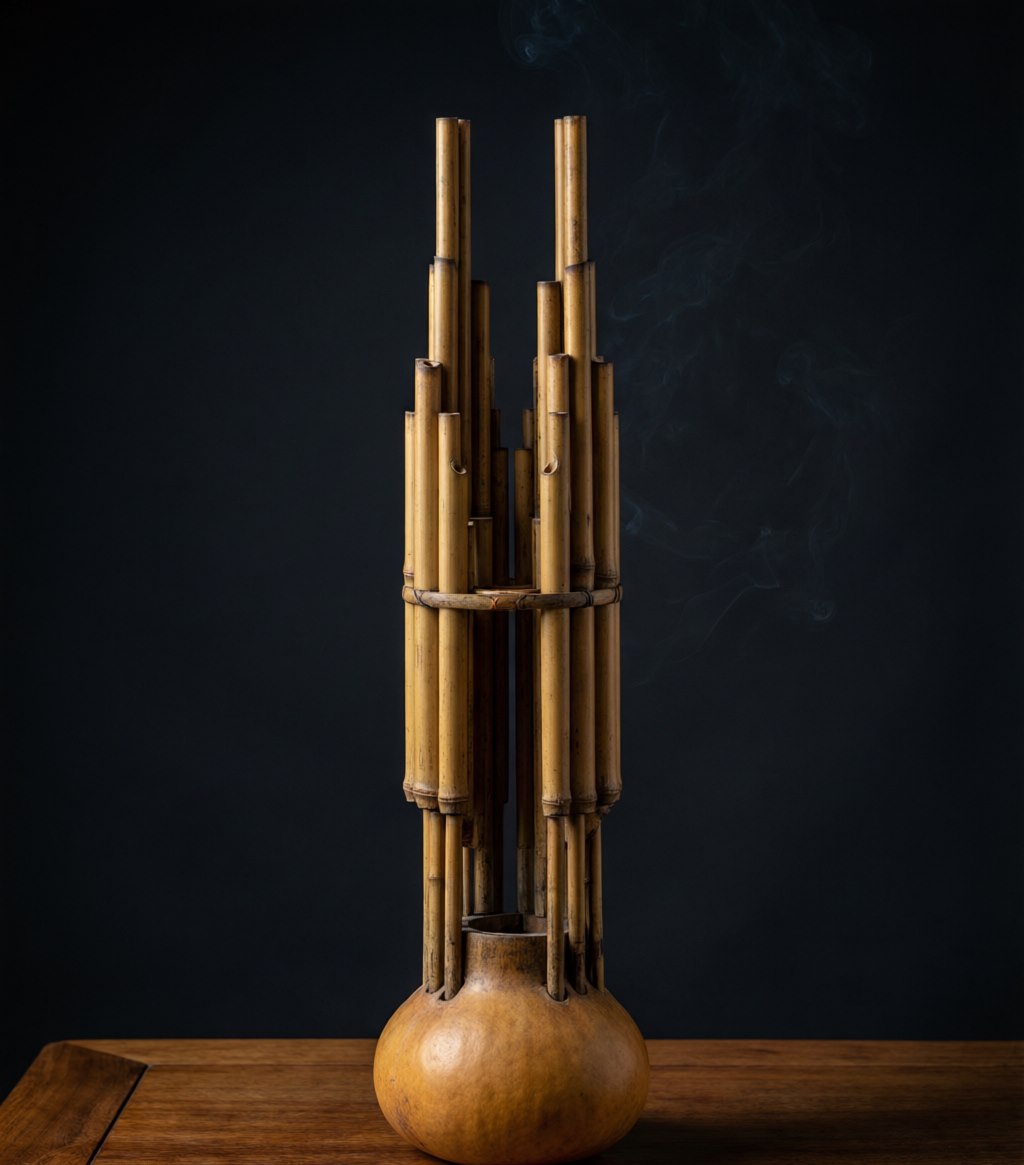 Gourd · 匏
Among the oldest instruments on earth — and the first to play harmony.
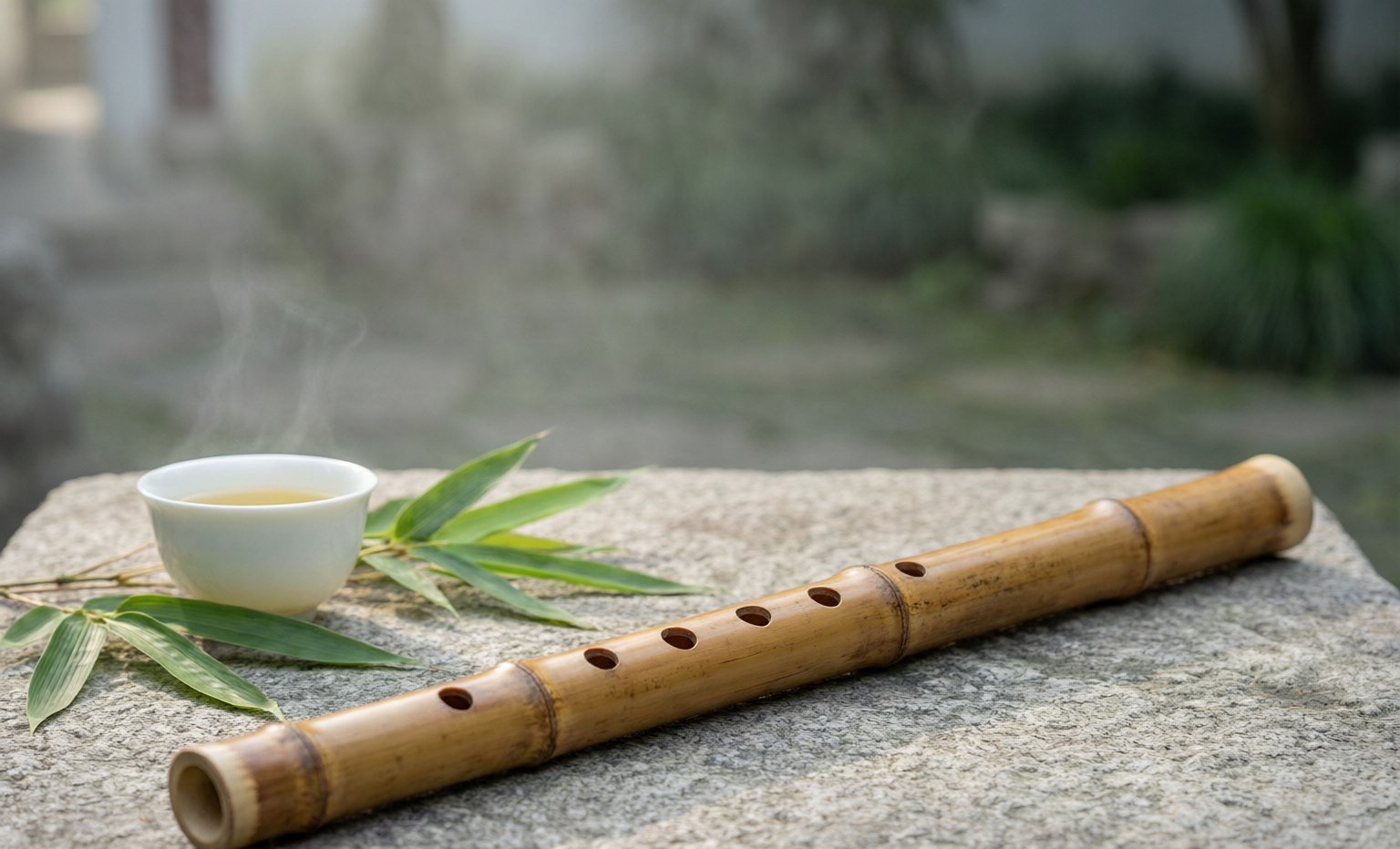 Bamboo · 竹
The bright, singing bamboo flute with a buzzing membrane hole.
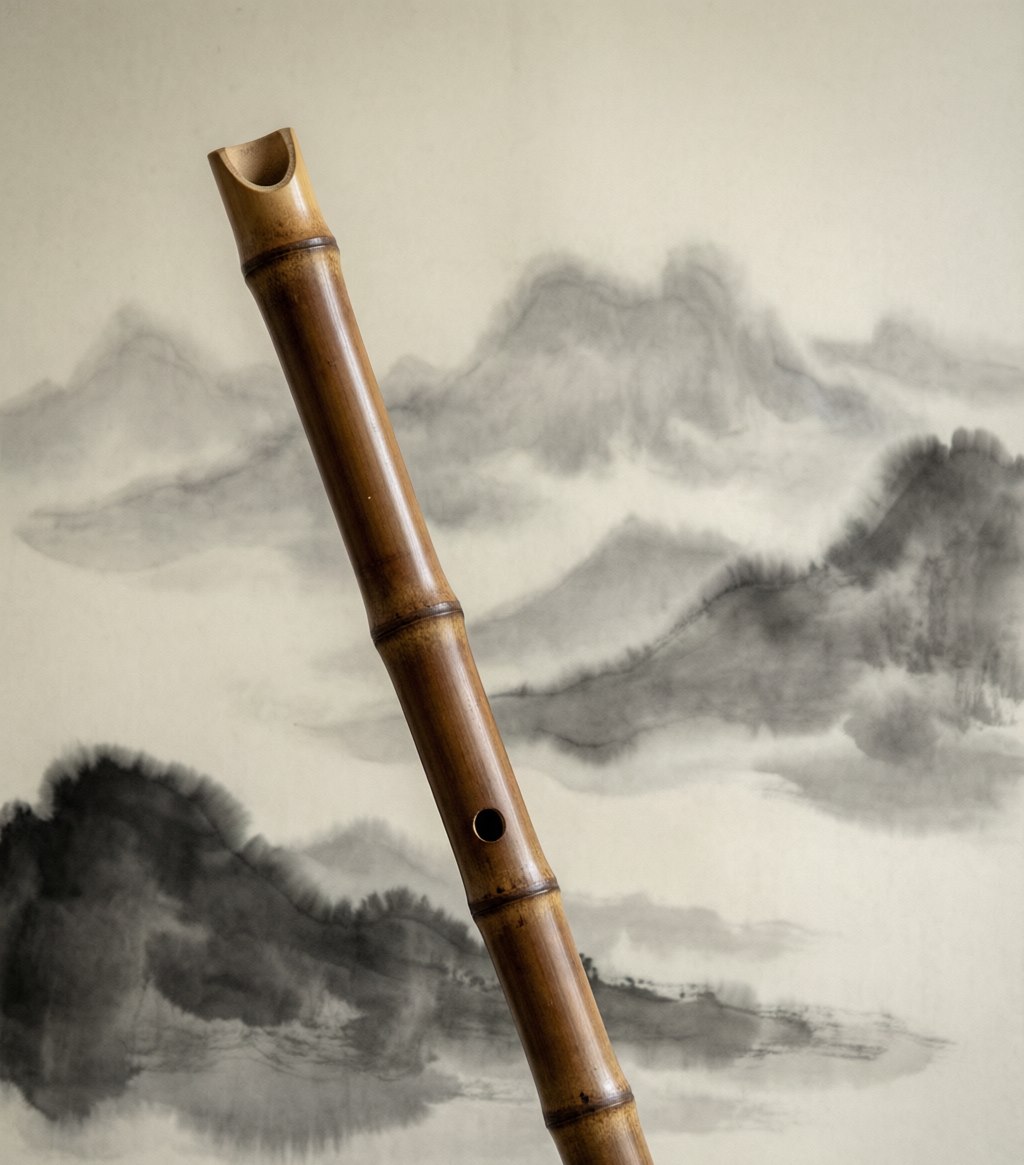 Bamboo · 竹
Soft, solitary, and meditative — the sound of mountain hermits.
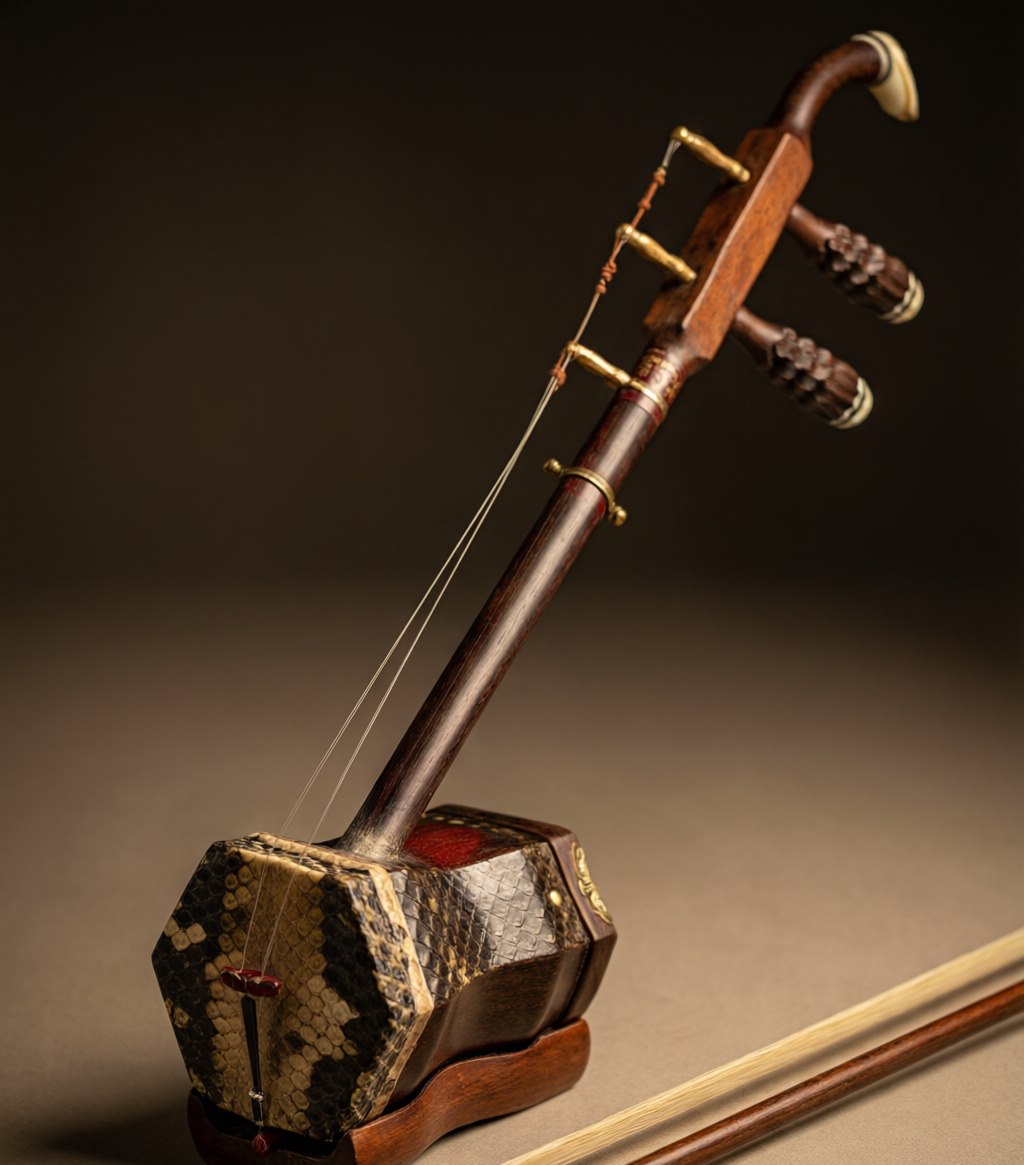 Silk · 丝
A two-stringed bowed voice that can imitate the human cry.
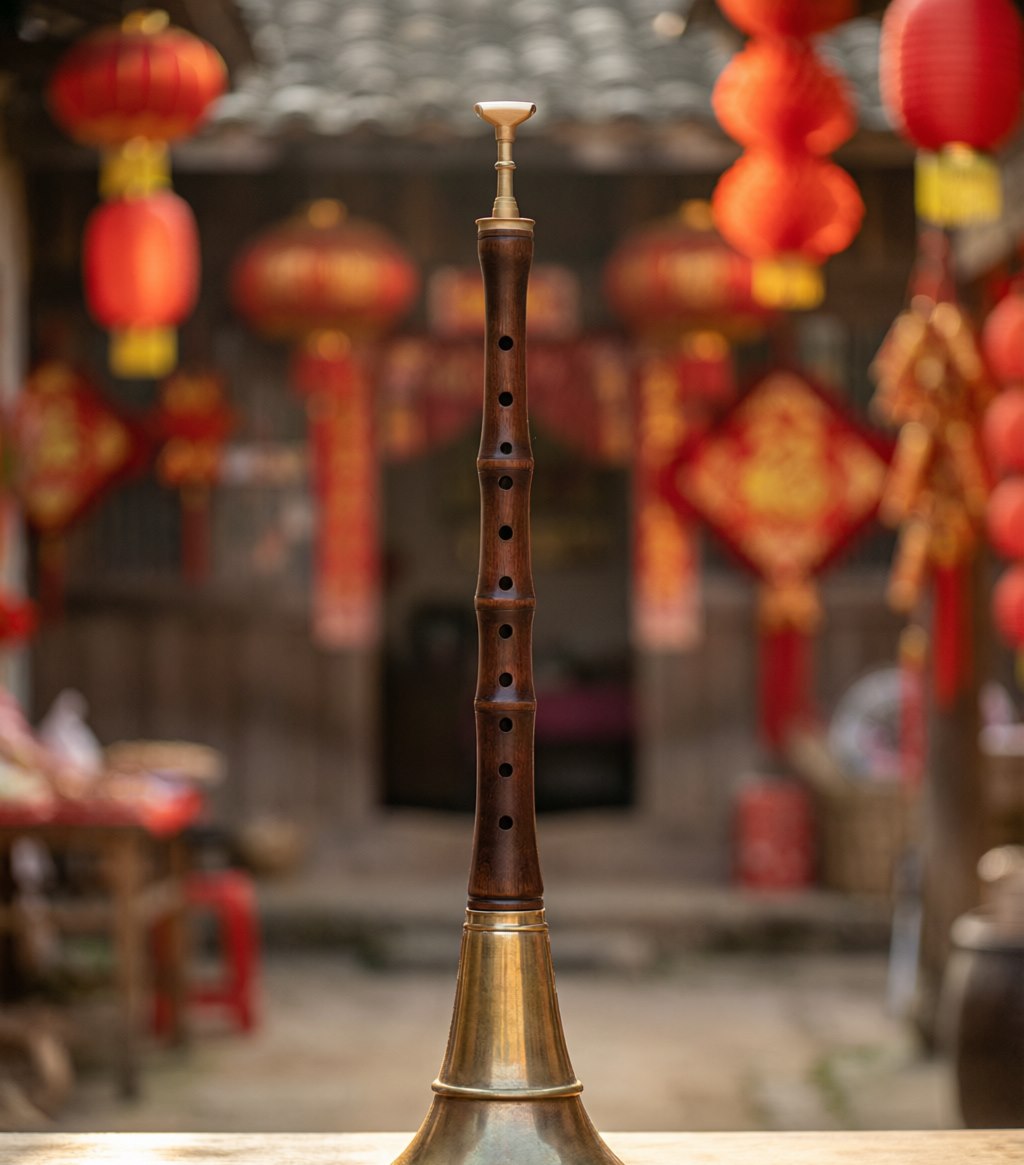 Wood · 木
Loud, joyous, and unmissable — the voice of weddings and funerals.
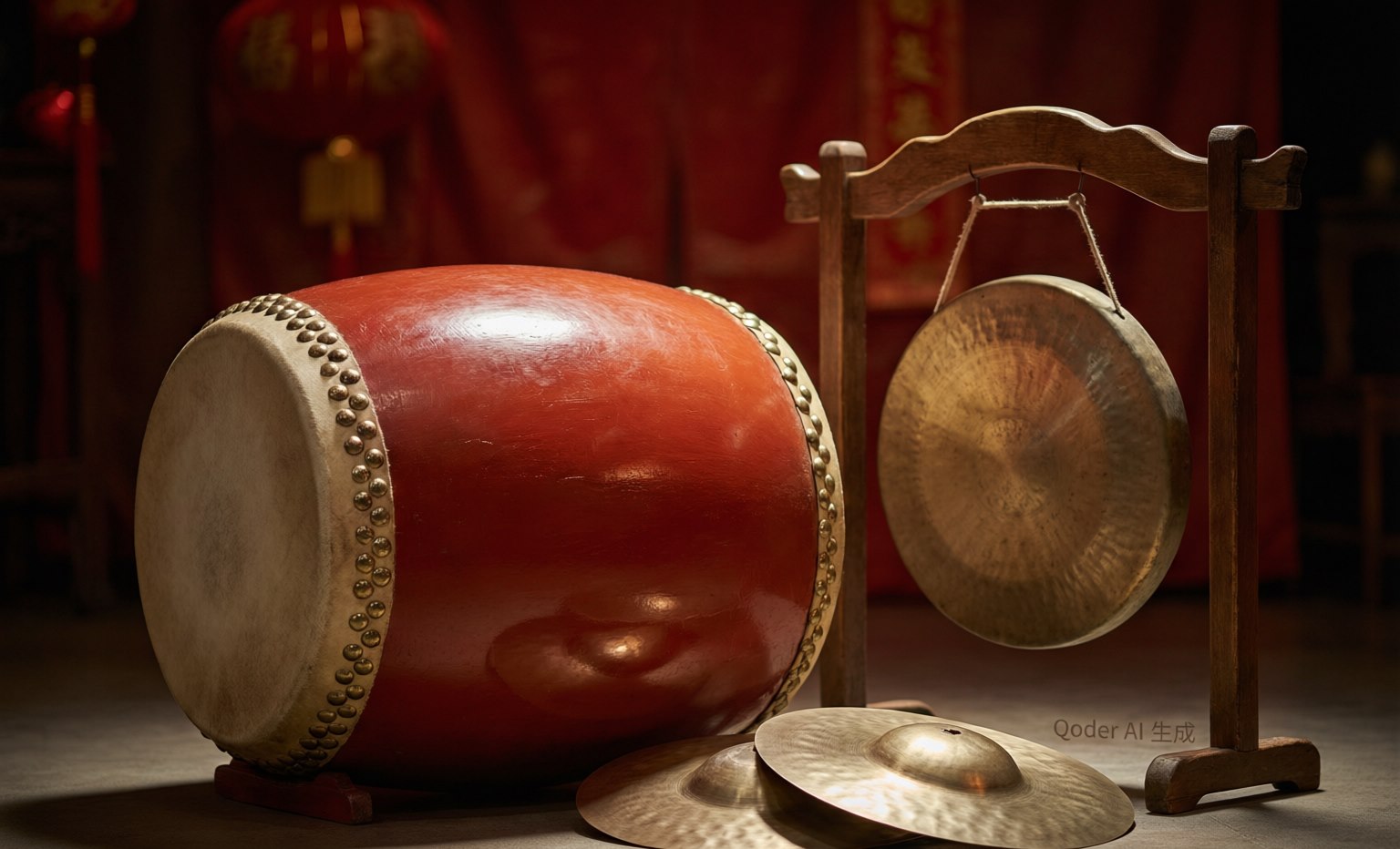 Leather & Metal
The drums and gongs that drive opera, festival, and dragon dance.