The Cashless Reality: What You're Walking Into
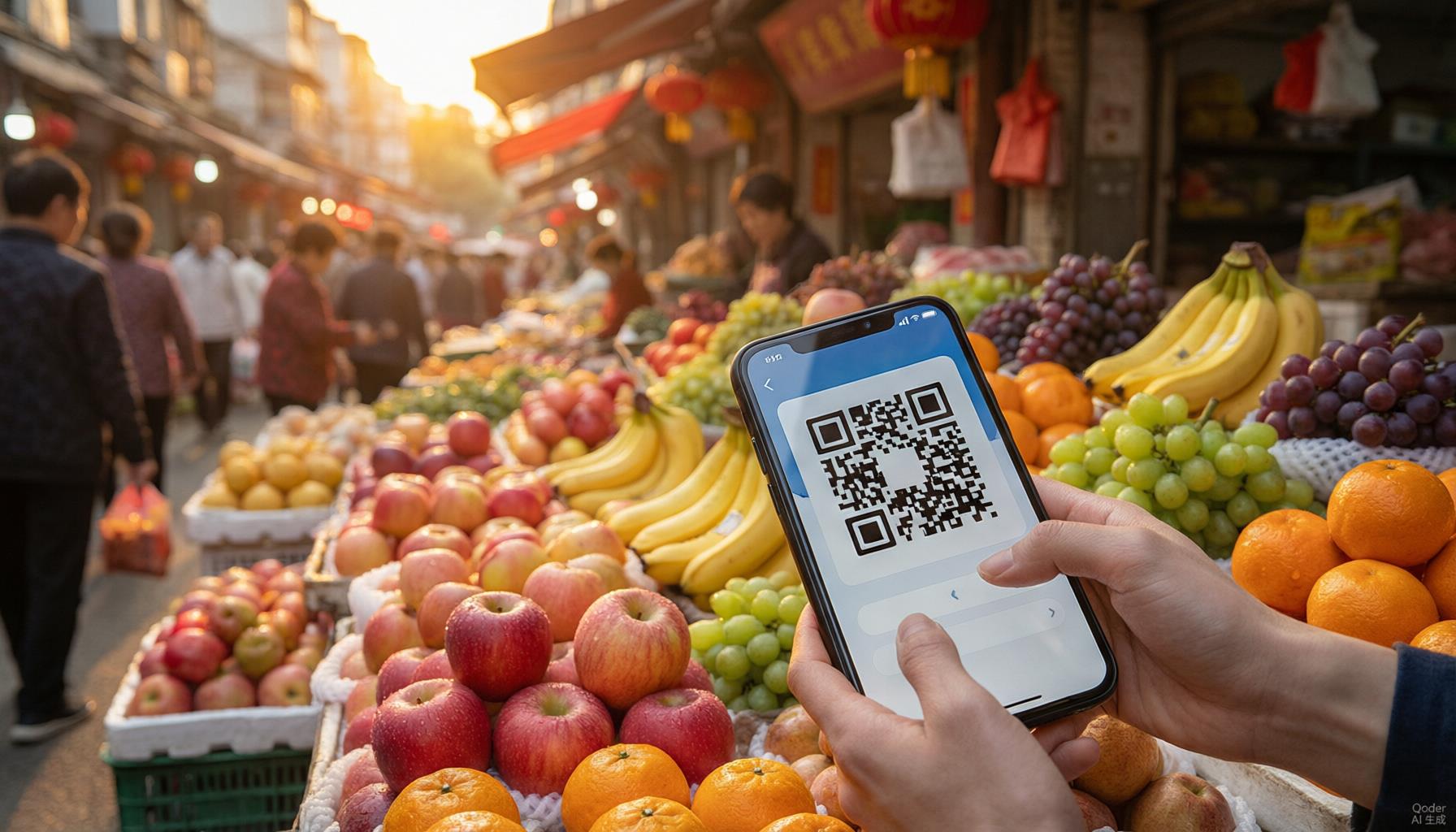
Let's set expectations before you land. China is the most cashless society on earth. We're not talking "most places take cards" like in Europe. We're talking about a 70-year-old woman selling roasted sweet potatoes from a cart who has a QR code taped to her steamer basket. Mobile payments account for over 90% of consumer transactions in urban China. In cities like Shenzhen, Hangzhou, and Shanghai, you can go an entire week without touching a single banknote.
The two platforms that run this system are Alipay (Zhifubao, 支付宝), owned by Ant Group, and WeChat Pay (Weixin Zhifu, 微信支付), built into the WeChat messaging app. Between them, they process trillions of yuan in transactions annually. Every shop, restaurant, taxi, metro station, hospital, parking lot, and street vendor operates through one or both of these apps. Many small businesses literally do not have a cash register. Their entire revenue flows through a printed QR code on the counter.
The good news for travelers: since 2023, both Alipay and WeChat Pay have opened their platforms to foreign users with international bank cards. You no longer need a Chinese bank account or a Chinese phone number to get started. The setup takes about 15 minutes, and you can do it before you leave home. This guide walks you through exactly how.
Setting Up Alipay (Zhifubao, 支付宝) as a Foreigner
Alipay is the more foreigner-friendly of the two apps, with an English-language interface and a dedicated onboarding flow for international users. Here's the step-by-step:
Step 1: Download the app. Search "Alipay" in the Apple App Store or Google Play Store. The icon is blue with the character 支. Make sure you download the official app by Ant Group, not a third-party clone.
Step 2: Register with your phone number. You can use your home-country phone number. Alipay supports international numbers from most countries. You'll receive an SMS verification code. If you have a Chinese SIM, that works too and may be more reliable for receiving codes.
Step 3: Verify your identity. Go to "Account" and select "Identity Verification." You'll be asked to upload a photo of your passport (the photo page) and take a selfie. This process is usually approved within a few hours, sometimes instantly. Without verification, your transaction limits are very low (around 1,000 RMB total).
Step 4: Link your international card. Go to "Me" > "Bank Cards" > "Add Card." Alipay accepts Visa, Mastercard, JCB, and Diners Club international cards. Enter your card details. Your bank may send a verification charge (usually under $1) that you'll need to confirm. Once linked, you can pay directly from your card balance, converted at the prevailing exchange rate.
Step 5: Understand the Tour Pass (optional). Alipay previously offered a "Tour Pass" that loaded a prepaid balance from your foreign card. As of 2024-2025, the direct card-linking method has largely replaced this for most users, but you may still see the option. If direct linking works for your card, use that. It's simpler and avoids the Tour Pass's 90-day expiry and 2,000 RMB top-up limits.
Transaction limits for verified foreign users: typically 5,000 RMB per transaction and around 50,000 RMB annually when paying with a linked international card. For a 6-day trip, this is more than enough unless you're buying jade furniture.
Setting Up WeChat Pay (Weixin Zhifu, 微信支付)
WeChat Pay is embedded inside WeChat (Weixin, 微信), the messaging app that 1.3 billion Chinese people use for, well, everything. If Alipay is a wallet, WeChat Pay is a wallet sewn into the social network where everyone you meet already lives. Many smaller vendors, especially in southern China, prefer WeChat Pay over Alipay.
Step 1: Download WeChat and register with your phone number. You'll need to verify via SMS. Note: WeChat registration for new international accounts sometimes requires an existing WeChat user to "vouch" for you by scanning a QR code. If you hit this wall, ask any Chinese friend, colleague, or hotel concierge to help. It takes them 10 seconds.
Step 2: Access WeChat Pay. Go to "Me" > "Services" (or "Wallet" in some versions). If you don't see the Services/Wallet option, your account region may need to be set to China. Go to "Me" > "Settings" > "General" > "Tools" > "WeChat Pay" to enable it.
Step 3: Verify your identity. You'll need to enter your real name (as it appears on your passport) and upload a passport photo. This is required before you can link a card or make payments.
Step 4: Link an international card. WeChat Pay supports Visa and Mastercard international cards. Go to "Services" > "Wallet" > "Cards" > "Add a Card." Enter your card details and complete any bank verification.
The interface is less polished in English than Alipay's, and some menus may appear in Chinese even with your language set to English. The core payment functions work fine, but navigating settings can feel like a puzzle. If you only set up one app, make it Alipay. If you have time for both, do both. Having two payment options means you're never stuck when one system has a glitch.
Scan to Pay vs. Show Your Code: The Two Payment Flows
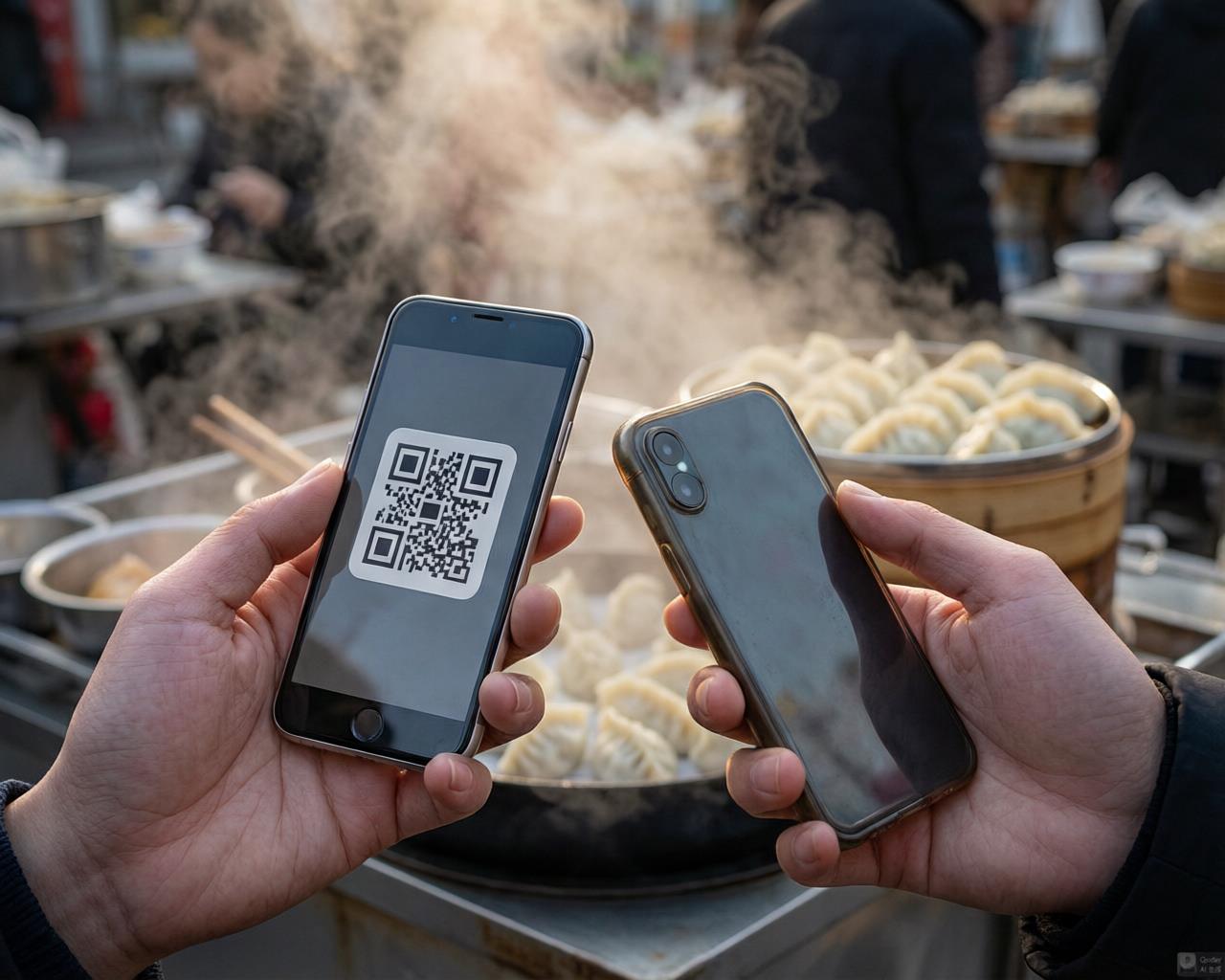
There are two ways a mobile payment transaction works in China, and understanding the difference will save you confusion at the counter.
Flow 1: You scan their code ("Scan to Pay"). The vendor shows you a printed QR code (usually a sticker on the counter or wall). You open Alipay or WeChat, tap "Scan," point your camera at their code, enter the amount they tell you, and confirm. The money leaves your account instantly. This is how 90% of small transactions work: street food, small shops, market stalls, parking meters.
Flow 2: They scan your code ("Payment Code"). You open your app and display your personal payment barcode/QR code (in Alipay: tap "Pay/Collect" at the top; in WeChat: "Services" > "Money" > "Payment Code"). The vendor scans YOUR screen with their scanner gun or phone. The amount is deducted automatically. This is how larger stores, supermarkets, metro stations, and chain restaurants work. No amount entry needed on your end. Just hold up your code and let them scan.
Both flows take about 3 seconds. No PIN, no signature, no receipt unless you ask. The transaction appears in your app's history immediately. If you're in a subway station, you'll often see turnstiles with QR scanners. Open your payment code, hold it to the scanner, and the gate opens. The fare is deducted when you exit and scan again.
Pro tip: Before you walk up to any counter, have your payment app open and your payment code ready. Fumbling through your phone while a line forms behind you is the universal sign of a tourist. Watch what the person in front of you does. If they scan a sticker on the wall, you scan. If they hold their phone up to a scanner, you hold yours up. Mirror the locals and you'll look like you've done this a hundred times.
Where Cash Still Works (and Where It Doesn't)
China has not abolished cash. The People's Bank of China has explicitly stated that refusing cash is illegal, and businesses technically cannot turn away banknotes. In practice, the situation is more nuanced.
Where cash works fine: International hotel chains (Marriott, Hilton, Shangri-La) will accept cash and foreign credit cards at the front desk. Large department stores and shopping malls have cashiers who can handle banknotes. Bank of China branches will exchange currency. Most tourist attractions (the Forbidden City, Terracotta Warriors, etc.) accept cash at their ticket windows, though many now push you toward online booking through WeChat mini-programs.
Where cash is awkward: Small restaurants and street food stalls often have zero change. If you hand a 100 RMB note to a jianbing vendor for a 7 RMB breakfast, they may genuinely not have 93 RMB in change. Taxi drivers (especially Didi drivers) may not carry cash. Metro ticket machines in some cities only accept exact change or mobile payment. Convenience stores like 7-Eleven and FamilyMart can handle cash, but the cashier may sigh visibly.
Where cash is essentially useless: Didi (China's Uber) requires in-app payment. Online train ticket bookings through 12306 require mobile payment. Many museum and attraction reservations are app-only. Bike-sharing (Meituan, Hello Bike) is app-only. If you rely solely on cash, you will find yourself locked out of a significant portion of daily infrastructure.
The practical approach: set up Alipay or WeChat Pay as your primary payment method, and carry 200-500 RMB in cash as a backup. Break it into 10s, 20s, and 50s. You'll use it for the occasional vendor who prefers cash, for temple donation boxes, and for the rare situation where your phone dies at the worst possible moment.
ATMs, Currency Exchange, and Getting RMB
You'll want some cash on hand. Here's how to get it efficiently.
ATMs: Bank of China (Zhongguo Yinhang, 中国银行) ATMs are your best bet. They reliably accept foreign Visa, Mastercard, Cirrus, and Plus cards, and they dispense 100 RMB notes. You'll find them at airports, metro stations, and on every major commercial street. ICBC and China Construction Bank ATMs also generally work with foreign cards. Withdrawal limits are typically 2,000-5,000 RMB per transaction. Your home bank will likely charge a foreign ATM fee ($3-5 per withdrawal) plus a currency conversion markup (1-3%). Withdraw larger amounts less frequently to minimize per-transaction fees.
Airport exchange counters: Every international airport in China has currency exchange desks (usually branded "Travelex" or "Exchange"). Rates are worse than ATMs by 3-5%, and there's often a 50-100 RMB service fee per transaction. Use these only in an emergency or if you arrive with zero RMB and need cash for a taxi before you can find an ATM. At Beijing Capital and Shanghai Pudong, ATMs are available in the arrivals hall before you even exit the airport.
Bank of China branches: If you need to exchange a larger amount of cash (say, leftover USD or EUR), a Bank of China branch offers the best rates. Bring your passport. The process takes 10-15 minutes. Rates are posted on electronic boards in the lobby. Major branches in tourist areas (Wangfujing in Beijing, Nanjing Road in Shanghai) have English-speaking staff.
Credit cards: Visa and Mastercard are accepted at international hotel chains, some upscale restaurants in tourist areas, and large shopping malls. They are NOT accepted at local restaurants, street vendors, taxis, metro stations, or most domestic businesses. American Express and Discover are even less widely accepted. Do not arrive in China expecting to swipe your way through the trip. Your credit card is a backup for hotel deposits and the occasional nice dinner, nothing more.
Tipping, Scams, and Payment Etiquette
Tipping: China does not have a tipping culture. You do not tip at restaurants, in taxis, at hotels, or for tour guides (unless you've hired a private guide who explicitly works for tips, which is rare). Attempting to tip at a local restaurant will cause confusion. The server may chase you down the street to return your "forgotten" change. At high-end international hotels, a small tip for bellhops (10-20 RMB) is appreciated but not expected. The simplest rule: don't tip unless someone has provided an exceptional personal service and the context clearly calls for it.
QR code scams: Be aware of two common scams targeting foreigners. First: fake QR codes pasted over legitimate ones at street stalls. If a vendor's QR code looks like a sticker placed over another sticker, be cautious. Second: strangers asking you to "scan their code" for a promotion or petition. This can authorize a payment or add you to spam groups. Only scan codes from vendors you're actively buying from.
Payment disputes: If you're charged the wrong amount, show the vendor your transaction history in the app. The amount, time, and merchant name are all visible. Most disputes are honest mistakes and are resolved immediately with a refund through the app. For larger issues, Alipay and WeChat both have in-app customer service (Alipay's is available in English).
Common Payment Scenarios: A Quick Reference
Here's how payment works in the situations you'll encounter most:
Street food and small restaurants: Scan the vendor's QR code (Alipay or WeChat), enter the amount they tell you, confirm. A bowl of Lanzhou noodles: 12-18 RMB. Jianbing (breakfast crepe): 7-12 RMB. A full dinner at a local restaurant: 40-80 RMB per person.
Metro and buses: In most cities, open your Alipay or WeChat payment code and scan it at the turnstile scanner. The fare is calculated on exit. Single rides cost 2-7 RMB depending on distance. In some cities, you can also buy single-journey tokens with cash at station machines. Buses are usually a flat 2 RMB, paid by scanning or dropping exact change in a box.
Taxis and Didi: Street taxis have meters and accept cash, though drivers prefer mobile payment. Didi (the ride-hailing app, available in English) requires in-app payment linked to Alipay or WeChat Pay. A 20-minute Didi ride in Shanghai costs roughly 30-50 RMB. Always use Didi over unmarked "black taxis" that approach you at airports or train stations.
Hotels: International chains accept foreign credit cards and cash. Budget hotels and guesthouses may only accept mobile payment or cash. When booking through Trip.com (Ctrip), you can often prepay with an international card, which eliminates the payment question at check-in.
Tourist attractions: Major sites (Forbidden City, Terracotta Warriors, Bund observation decks) increasingly require advance online booking through WeChat mini-programs or official websites. Payment is via Alipay or WeChat Pay. Some still have ticket windows accepting cash, but availability is not guaranteed, especially during holidays. Book online the day before.
Train tickets: Book through the 12306 app or website (now available in English) or through Trip.com. Payment is via Alipay, WeChat Pay, or international credit card on Trip.com. At the station, you enter with your passport (no paper ticket needed for most high-speed routes).
Warning: Set up your payment apps BEFORE you leave home, not after you land. You'll need a stable internet connection for SMS verification codes and identity verification, and airport WiFi in China can be unreliable. Download Alipay and WeChat, complete registration, link your cards, and make a small test transaction (even a $1 transfer to a friend) to confirm everything works. Arriving in China with unverified payment apps and no cash is a genuinely stressful way to start a trip.
Your pre-departure checklist: Download and verify Alipay with your passport. Link your Visa or Mastercard. Confirm the link with a test transaction. Download and register WeChat. Enable WeChat Pay, verify identity, link a card. Withdraw or exchange 300-500 RMB in small denominations (10s, 20s, 50s) for backup. Notify your bank that you'll be in China so they don't flag transactions as fraud. Download the Didi app and link it to your Alipay. Screenshot your Alipay and WeChat payment codes in case you lose signal. Save the customer service numbers: Alipay hotline 95188 (English option available), WeChat Pay in-app support.
Do all of this and you'll step off the plane into the most seamless payment environment in the world. No fumbling with unfamiliar coins, no language barrier at the register, no "sorry, we don't take foreign cards." Just scan, confirm, and move on. China's cashless system was not built with tourists in mind, but once you're set up, it works just as well for you as it does for the 1.3 billion people who use it every day.