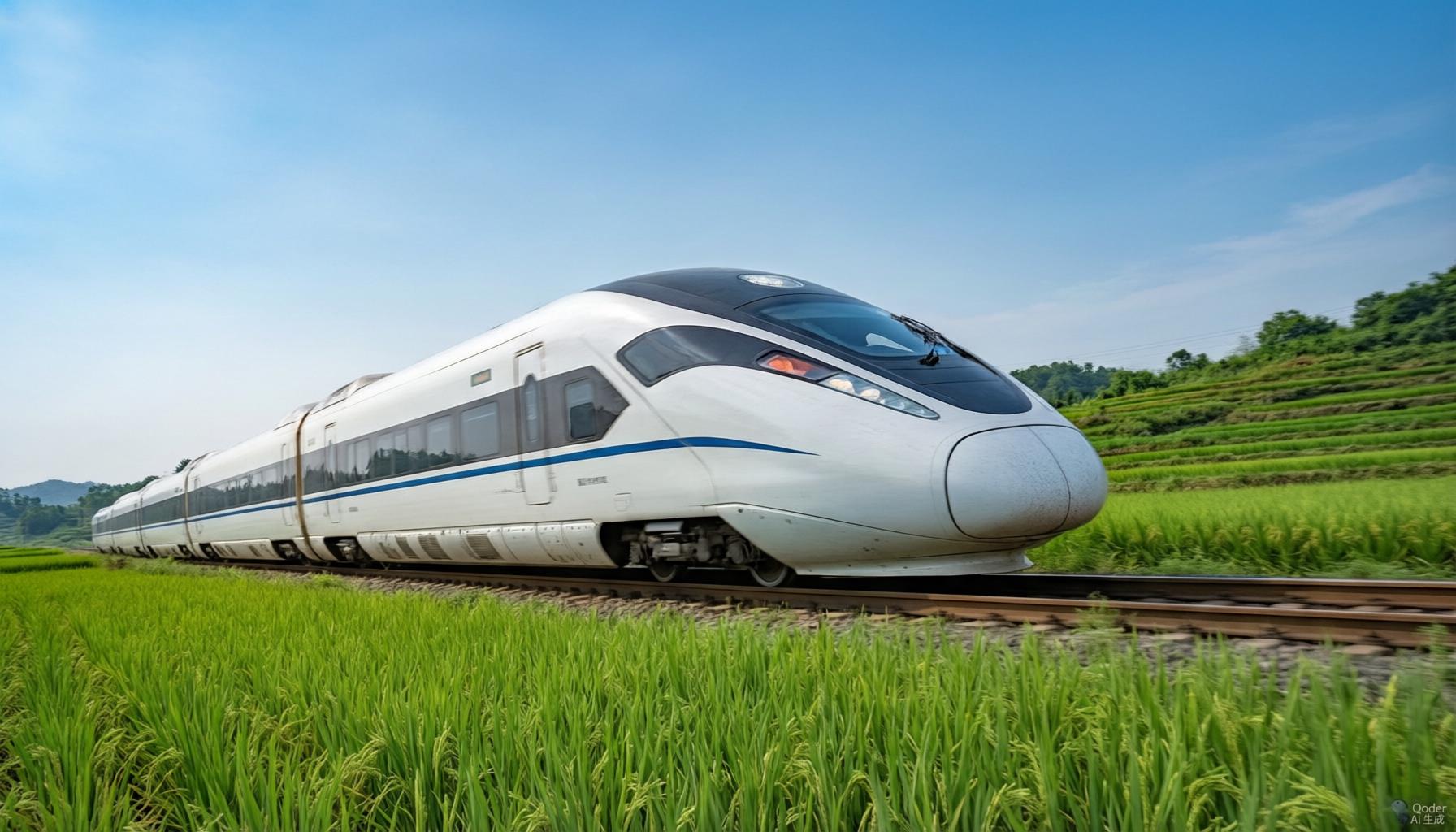
China's transportation network is, by any measure, staggering. The country operates the world's largest high-speed rail network, runs metro systems in over 50 cities, and connects even remote provincial capitals with frequent, affordable flights. For a first-time visitor, the sheer scale can feel intimidating. But here's the truth that seasoned travelers know: getting around China is often easier, cheaper, and more punctual than in most Western countries. The systems are modern, the infrastructure is new, and once you learn the rhythm, you'll wonder how you ever traveled anywhere else.
This guide walks you through every major mode of transport you'll actually use as a visitor, with the specific steps, apps, and insider knowledge to move through China like you've done it before.
High-Speed Rail (Gaotie, 高铁): The Backbone of Chinese Travel
Forget everything you think you know about trains. China's high-speed rail network, called Gaotie (高铁), spans over 45,000 kilometers — more than the rest of the world's high-speed rail combined. Trains run at up to 350 km/h, stations are gleaming airports-on-the-ground, and punctuality is measured in seconds, not minutes. For distances under 1,000 km, the train beats flying every time once you factor in airport transfers, security lines, and boarding.
Speed categories matter. China runs two main types of high-speed service: G-trains (Gaotie, 高铁) travel at 300–350 km/h and stop only at major stations, while D-trains (Dongche, 动车) run at 200–250 km/h and make more stops. A G-train from Beijing to Shanghai covers 1,318 km in about 4 hours 18 minutes. The same route on a D-train takes roughly 6 hours. For short hops like Shanghai to Hangzhou (160 km), a G-train gets you there in under 50 minutes.
How to book tickets: The official system is 12306 (12306.cn), operated by China State Railway Group. It has an English-language app and website, but the interface can be clunky and foreign passport verification sometimes takes 24–48 hours on first use. Most foreign travelers find it easier to book through Trip.com (the international arm of Ctrip), which charges a small service fee of around 20–40 RMB per ticket but handles everything smoothly in English, accepts international credit cards, and provides customer support. Tickets open for sale 15 days in advance, and popular routes (especially Beijing–Shanghai and Shanghai–Hangzhou during holidays) sell out fast. Book the moment the window opens.
At the station: Arrive at least 45 minutes before departure for major stations like Beijing South, Shanghai Hongqiao, or Guangzhou South. These stations are enormous — think airport terminal scale. You'll pass through a security checkpoint (bags go through an X-ray scanner, you walk through a metal detector), then find your departure gate by checking the electronic boards or your ticket. Boarding requires an ID check: foreign passport holders scan their passport at a manual verification lane (look for the staffed window beside the automatic gates, which only read Chinese ID cards). Your ticket is electronic — no paper needed — linked to your passport number.
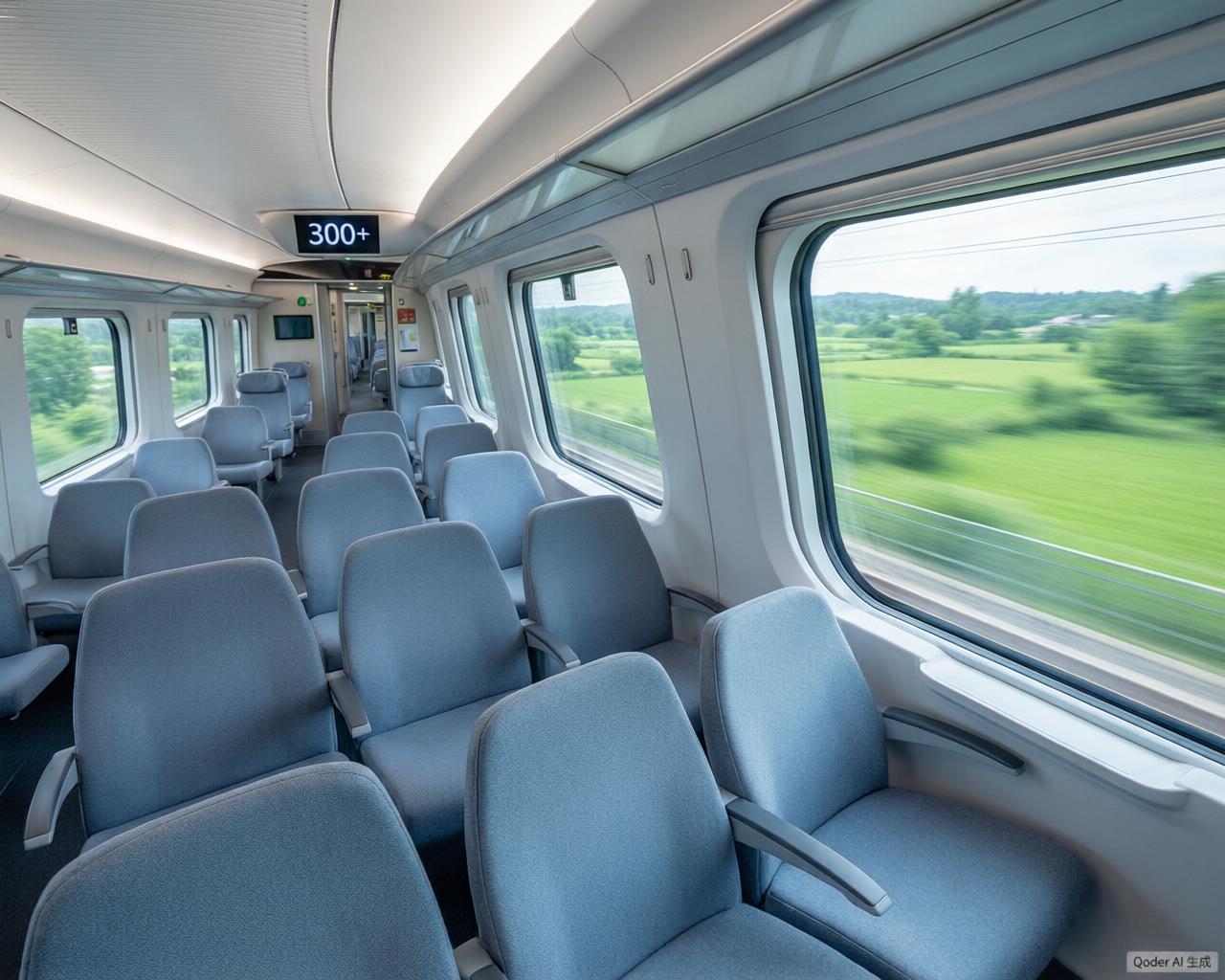
Onboard experience: Second-class seats (the default) are comfortable, comparable to economy-plus on a good airline: 2+3 configuration, reclining, with a fold-out tray table and power outlet. First class offers 2+2 wider seats. Business class is lie-flat luxury at roughly 3x the second-class price. Every seat has a small screen or phone holder. Food is available from a trolley (boxed meals around 30–60 RMB, instant noodles, snacks, drinks), but the smart move is to grab food before boarding or order delivery to your seat via the 12306 app at certain stations. Luggage goes on overhead racks or in dedicated areas at the ends of each car — there's no checked baggage system, so pack what you can carry.
Key routes to know: Beijing–Shanghai (4.5 hours, from 553 RMB second class), Shanghai–Hangzhou (50 minutes, from 73 RMB), Guangzhou–Shenzhen (30 minutes, from 75 RMB), Beijing–Xi'an (4.5 hours, from 515 RMB), Chengdu–Chongqing (1 hour, from 154 RMB). These frequencies run every 10–20 minutes during peak hours on major corridors.
Metro and Subway (Ditie, 地铁): Your Urban Workhorse
Over 50 Chinese cities operate metro systems, and the major ones — Beijing, Shanghai, Guangzhou, Shenzhen, Chengdu, Nanjing, Wuhan — have networks that rival or exceed anything in Europe. Trains run every 2–5 minutes during peak hours, stations are spotless, and fares are absurdly cheap: typically 3–7 RMB (about $0.40–$1.00) for most rides regardless of distance.
How to ride: You have three options. First, buy a single-journey token or card from the vending machines in every station (they have English interfaces, accept coins and small bills, and increasingly accept mobile payment). Second, use a transit card — in Beijing it's the Yikatong (一卡通), in Shanghai the Jiaotong Ka (交通卡) — which you tap at entry and exit gates. Third, and this is what most people actually do now: open Alipay or WeChat, navigate to the transit code section (in Alipay: Transport > select your city > Metro), and scan the QR code at the gate. This works in virtually every metro system in China and requires no physical card whatsoever.
Navigation: In tier-1 cities (Beijing, Shanghai, Guangzhou, Shenzhen), all signage is bilingual Chinese-English. Station names are announced in both languages. Line maps use color coding and numbering (Line 1, Line 2, etc.) identical to systems you'd recognize from London or New York. In smaller cities, English signage may be sparse, but station names are always displayed in pinyin, which is readable enough. Baidu Maps or Apple Maps (which works in China) will give you precise metro routing with transfer instructions.
Rush hour warning: Beijing and Shanghai metros carry over 10 million passengers daily. Between 7:30–9:30 AM and 5:30–7:30 PM on weekdays, popular lines (Beijing Line 1, Line 10; Shanghai Line 1, Line 2) become genuinely packed — think Tokyo-level density. If you have luggage, avoid these windows. Station staff sometimes implement crowd control, closing entry gates temporarily. Trains still run on time; you just might wait for two or three to pass before you can squeeze on.
Taxis and Ride-Hailing: DiDi and the Language Barrier
Taxis are everywhere in Chinese cities, metered, and cheap by international standards. Flag fall in most cities is 10–14 RMB for the first 3 km, then roughly 2–3 RMB per additional kilometer. A 10-km ride across Shanghai costs around 35–45 RMB. Taxis are safe, regulated, and drivers use meters (insist on "da biao" — 打表 — if a driver hesitates, though this is increasingly rare).
DiDi (滴滴出行) is China's dominant ride-hailing platform — essentially Uber, but more deeply integrated into daily life. The app has an English interface, accepts international credit cards, and works in over 400 cities. You can request standard rides (Kuai Che, 快车), premium cars (Zhuan Che, 专车), or even carpool options. Pricing is transparent and shown before you confirm. During peak hours or rain, expect surge pricing of 1.3x–2x. DiDi also operates airport pickup services with designated meeting points.
The language problem and its solution: Most taxi drivers speak zero English. This is not an exaggeration — even in Shanghai, you'll encounter drivers who cannot parse a single English word. The solution is simple: always have your destination written in Chinese characters. Save addresses in your phone's notes app in Chinese. Your hotel's business card will have the Chinese address — show it to the driver. In DiDi, you type the destination in the app (use the English interface, it maps correctly), so the driver sees the Chinese address on their screen. For street-hailed taxis, showing a Chinese address on your phone screen works every time.
Pro tip: Never rely on saying a hotel's English name to a taxi driver. "The Peninsula" means nothing. "上海半岛酒店" (Shanghai Bandao Jiudian) gets you there instantly. Screenshot every address in Chinese before you leave your hotel.
Airport transfers: Major airports have dedicated taxi queues (follow signs for "Taxi" or "出租车"), DiDi pickup zones (usually in the parking structure, check the app for the exact meeting point), and airport express trains or buses. A taxi from Beijing Capital Airport to the city center runs 100–150 RMB plus a 10 RMB highway toll. From Shanghai Pudong, expect 150–200 RMB to central Shanghai. The airport express trains (like Beijing's Capital Airport Express at 25 RMB or Shanghai's Maglev at 50 RMB) are faster during rush hour when roads gridlock.
Domestic Flights: Cheap, Fast, and Extensive
China has over 250 commercial airports, and domestic flights are often remarkably cheap. A Beijing–Shanghai flight booked two weeks out can cost 600–900 RMB ($85–$125) — competitive with the train once you factor in time. Routes to western China (Urumqi, Lhasa, Kunming) or between southern cities where rail is slower make flying the obvious choice. Budget carriers like Spring Airlines (春秋航空) and West Air (西部航空) offer fares as low as 200–400 RMB on popular routes if you book early and travel light.
Booking: Trip.com and Ctrip (携程) are the go-to platforms. They aggregate all carriers, show real-time pricing, and handle foreign passport bookings without friction. You can also book directly through airline apps (Air China, China Southern, China Eastern all have English options), but the aggregators make comparison easier. Domestic flights don't require advance check-in for most carriers, but online check-in opens 24–48 hours before departure and lets you pick seats.
The 2-hour rule: Arrive at the airport at least 2 hours before domestic departure. Chinese airport security is thorough — you'll remove laptops, liquids, batteries, and sometimes shoes. At major hubs like Beijing Daxing, Guangzhou Baiyun, or Chengdu Tianfu, the terminal walk alone can take 15–20 minutes. Boarding gates close 15 minutes before departure, and they mean it. Late passengers are routinely denied boarding.
Airport experience: Chinese airports are modern, clean, and well-signed in English at major hubs. Food options range from fast food (KFC and McDonald's are ubiquitous) to sit-down restaurants. Free WiFi is available but often requires a Chinese phone number for SMS verification — another reason to get a local SIM. Charging stations are plentiful. One quirk: some airports have separate security checks at individual boarding gates in addition to the main checkpoint, so don't discard your boarding pass.
Buses and Long-Distance Coaches: The Backup Plan
City buses (Gongjiao, 公交) are the cheapest transport in any Chinese city, typically 1–2 RMB per ride. They're useful for short hops not covered by metro, but for visitors, they're often more trouble than they're worth: routes are complex, stops are announced only in Chinese on many lines, and you need exact change or a transit card. That said, in cities without metro coverage (or for reaching suburban attractions), buses fill the gap. Alipay's transit code works on buses in most cities, just like the metro.
Long-distance coaches (Changtu Qiche, 长途汽车) operate from dedicated bus stations (Qiche Zhan, 汽车站) in every city. They're relevant when you're heading somewhere without rail service — certain mountain areas, remote villages, or cross-border routes (like buses from Shenzhen to Hong Kong's airport). Tickets are bought at the station window or via WeChat mini-programs. Coaches are comfortable enough (reclining seats, air conditioning), but journeys are slower than trains and subject to highway traffic. For most travelers, they're a last resort rather than a first choice.
Practical Tips That Save You Hours
Always carry your passport. This cannot be overstated. You need it to board trains (ID verification at the gate), to check into hotels, and occasionally for metro security checks during sensitive periods. A photo on your phone is not a substitute. Keep the physical passport in a secure pocket or money belt. If you're nervous about loss, carry a color photocopy as a backup for situations where you just need to show ID casually, but know that only the real document works for trains and hotels.
Download offline maps before you go. Google Maps does not work in China — it's blocked and its data is inaccurate for Chinese cities anyway. Your options are Baidu Maps (百度地图, most comprehensive, Chinese interface) or Apple Maps (works well, has English interface, good for iOS users). Both allow offline map downloads. Download the city you're visiting before you arrive. Amap (Gaode Ditu, 高德地图) is another excellent option with slightly better navigation for drivers but equally good for transit routing.
The last-train problem: Metro systems shut down between 10:30 PM and 11:30 PM depending on the city and line. There are no night metros. If you're out late, you're looking at a taxi or DiDi. Plan accordingly — check the last train time for your specific line (posted at every station entrance and in the transit apps). On holidays and during major events, some cities extend metro hours, but don't count on it without confirmation.
Luggage storage: Major train stations have luggage storage facilities (look for signs reading "寄存" or "行李寄存"), typically charging 20–50 RMB per bag per day depending on size. Some metro stations in tourist areas also offer storage. Alternatively, services like "Cun Bao" (存包) operate app-based luggage storage at shops and hotels near attractions. This is invaluable when you arrive early or depart late and want to explore unencumbered.
Warning: During national holidays — especially Golden Week (October 1–7) and Chinese New Year — train tickets sell out within minutes of release, stations become overwhelmingly crowded, and normal travel rhythms break down. If you must travel during these periods, book tickets the instant they become available (15 days out) and arrive at stations 90 minutes early. Better yet: avoid these dates entirely.
Putting It All Together: A Sample Travel Day
Here's how transportation actually flows on a typical travel day in China. You wake up in your hotel in Shanghai, open Alipay, and scan the metro transit code to ride Line 2 to Shanghai Hongqiao Railway Station (40 minutes, 5 RMB). You pass through station security, verify your passport at the manual gate, and board a G-train to Hangzhou (50 minutes, 73 RMB). At Hangzhou East station, you follow signs to the taxi queue, show the driver your hotel's Chinese address on your phone, and arrive in 20 minutes (35 RMB). After checking in, you open DiDi to catch a ride to West Lake (15 minutes, 18 RMB). Total transport cost for a day involving three cities' worth of movement: under 130 RMB, roughly $18. No rental car, no confusion, no delays.
The system works. It's cheap, it's fast, it's safe, and once you've done it once, the anxiety evaporates completely. The key is preparation: have your Chinese addresses saved, your apps downloaded, your passport accessible, and your tickets booked in advance. Do those four things and China's transport network becomes not an obstacle but one of the genuine pleasures of traveling here.