What the 144-Hour Visa-Free Transit Actually Is
Here's the short version: citizens of 54 countries can enter China for up to 144 hours (that's 6 full days) without obtaining a visa in advance, as long as they are genuinely in transit to a third country or region. No embassy appointment. No $140 visa fee. No three-week processing wait. You land, show your onward ticket, and walk out into China.
The policy was introduced in 2016 as an expansion of the older 72-hour transit rule and has been progressively widened to cover more ports of entry and more city clusters. It exists for one reason: to make China easier to visit for short stopovers and multi-city trips without the friction of a full visa application. Think of it as China saying, "You're passing through? Great, come see the Forbidden City, eat xiaolongbao in Shanghai, or hike the karst peaks of Guilin on your way to Tokyo."
The critical word in the policy name is transit. This is not a tourist visa waiver. You must be traveling from Country A, through China, to Country B. If you fly New York to Beijing and then back to New York, you do not qualify. You need a confirmed onward ticket to a different country or region. More on that below, because this single rule is where most people trip up.
Who Is Eligible: The 54-Country List
The policy covers nationals of 54 countries. If your passport is from any of the following, you're in:
Europe (40 countries): Austria, Belgium, Czech Republic, Denmark, Estonia, Finland, France, Germany, Greece, Hungary, Iceland, Italy, Latvia, Lithuania, Luxembourg, Malta, Netherlands, Poland, Portugal, Slovakia, Slovenia, Spain, Sweden, Switzerland, Russia, United Kingdom, Ireland, Cyprus, Bulgaria, Romania, Ukraine, Serbia, Croatia, Bosnia and Herzegovina, Montenegro, North Macedonia, Albania, Monaco, Belarus, Norway.
Americas (6 countries): United States, Canada, Brazil, Mexico, Argentina, Chile.
Oceania (2 countries): Australia, New Zealand.
Asia (6 countries): South Korea, Japan, Singapore, Brunei, United Arab Emirates, Qatar.
A few practical notes on eligibility. Your passport must be valid for at least three months beyond your date of entry. You must enter and exit through designated ports within the same city cluster (more on clusters below). And you must have a confirmed seat on a flight, train, or cruise ship departing China within 144 hours. A "maybe I'll book something later" plan will not satisfy the immigration officer.
Which City Clusters Are Covered
The 144-hour policy doesn't give you free rein over all of China. You must stay within a designated regional cluster. Here are the major ones as of 2025-2026:
Beijing-Tianjin-Hebei: Enter through Beijing Capital (PEK), Beijing Daxing (PKX), Tianjin Binhai, or Shijiazhuang airports, or the Tianjin cruise port. You can roam freely across all three jurisdictions. That means the Great Wall at Mutianyu, the Tianjin Eye, and the Chengde Mountain Resort are all in play.
Shanghai-Jiangsu-Zhejiang: Enter through Shanghai Pudong (PVG) or Hongqiao (SHA), Nanjing, Hangzhou, or Ningbo airports, or the Shanghai cruise ports. This cluster covers Shanghai, Suzhou, Hangzhou, Nanjing, and the water towns of Zhejiang. Arguably the richest cluster for a 6-day trip.
Guangdong (Guangzhou-Shenzhen): Enter through Guangzhou Baiyun (CAN), Shenzhen Bao'an (SZX), or Jieyang Chaoshan airports, or through the Nansha and Shekou cruise ports. Covers the entire Pearl River Delta, including Zhuhai, Foshan, and Dongguan.
Chengdu-Chongqing: Enter through Chengdu Tianfu (TFU) or Shuangliu (CTU), or Chongqing Jiangbei (CKG). Two of China's most food-obsessed cities, plus access to the Leshan Giant Buddha and Dazu Rock Carvings.
Other designated clusters: Xi'an (Xianyang Airport), Kunming (Changshui Airport), Guilin (Liangjiang Airport), Harbin (Taiping Airport), Shenyang (Taoxian Airport), Dalian (Zhoushuizi Airport), Qingdao (Jiaodong Airport), Xiamen (Gaoqi Airport), Wuhan (Tianhe Airport), and Changsha (Huanghua Airport). Each of these typically restricts you to the administrative area of that city or province.
The Key Rules You Must Follow
Three rules cause 95% of problems. Memorize them.
Rule 1: The onward ticket must be to a third country or region. If you fly in from London, your onward ticket cannot go back to London. It must go to a different country. Hong Kong, Macau, and Taiwan count as separate regions for this purpose, so London to Beijing to Hong Kong works perfectly. So does Tokyo to Shanghai to Seoul. What does NOT work: Sydney to Guangzhou to Sydney.
Rule 2: You must stay within your designated cluster. If you enter through Shanghai Pudong, you cannot take a high-speed train to Beijing. You are confined to the Shanghai-Jiangsu-Zhejiang region for the duration of your stay. Violating this is treated as illegal residence and carries fines of 500 RMB per day (up to 10,000 RMB) plus potential detention and a ban on future entry.
Rule 3: The 144-hour clock starts at 00:01 the day AFTER entry. This is generous and catches people off guard in a good way. Land at 11pm on Monday? Your 144 hours don't start ticking until 00:01 on Tuesday. You effectively get part of Monday plus six full days. You must depart before the 144 hours expire, meaning by 23:59 on the sixth day after the clock starts.
Pro tip: Book your onward flight for the morning of day 6, not the evening. If your flight is delayed or cancelled and you're stuck past midnight, you've technically overstayed. A morning departure gives you a buffer. Airlines will also check your onward ticket at check-in for your flight INTO China. No onward ticket, no boarding pass. This is enforced at the departure gate, not just at Chinese immigration.
Step-by-Step: What Happens at Immigration
You've landed. Here's exactly what to do, in order:
Step 1: Fill out the arrival card. On the plane, the crew will distribute blue arrival/departure cards (or you'll find them at counters before immigration). Fill in your name, passport number, flight number, and address in China (your hotel name and address work). If you don't have a pen, there are usually writing stations near the immigration hall.
Step 2: Find the 24/144-Hour Transit lane. Most major airports have a dedicated lane or counter for transit-without-visa passengers. At Beijing Capital, it's clearly signed. At Shanghai Pudong, look for the "24/144-Hour Direct Transit" counters, usually on the far left of the immigration hall. If you can't find it, ask any airport staff member. Say "144 hours, no visa" and they'll point you the right way.
Step 3: Present your documents. The officer will want: your passport (valid 3+ months), your completed arrival card, your onward ticket confirmation (printed or on your phone is fine), and sometimes proof of accommodation. Have your hotel booking confirmation ready just in case. The officer may ask where you're going and when you're leaving. Keep answers short and clear.
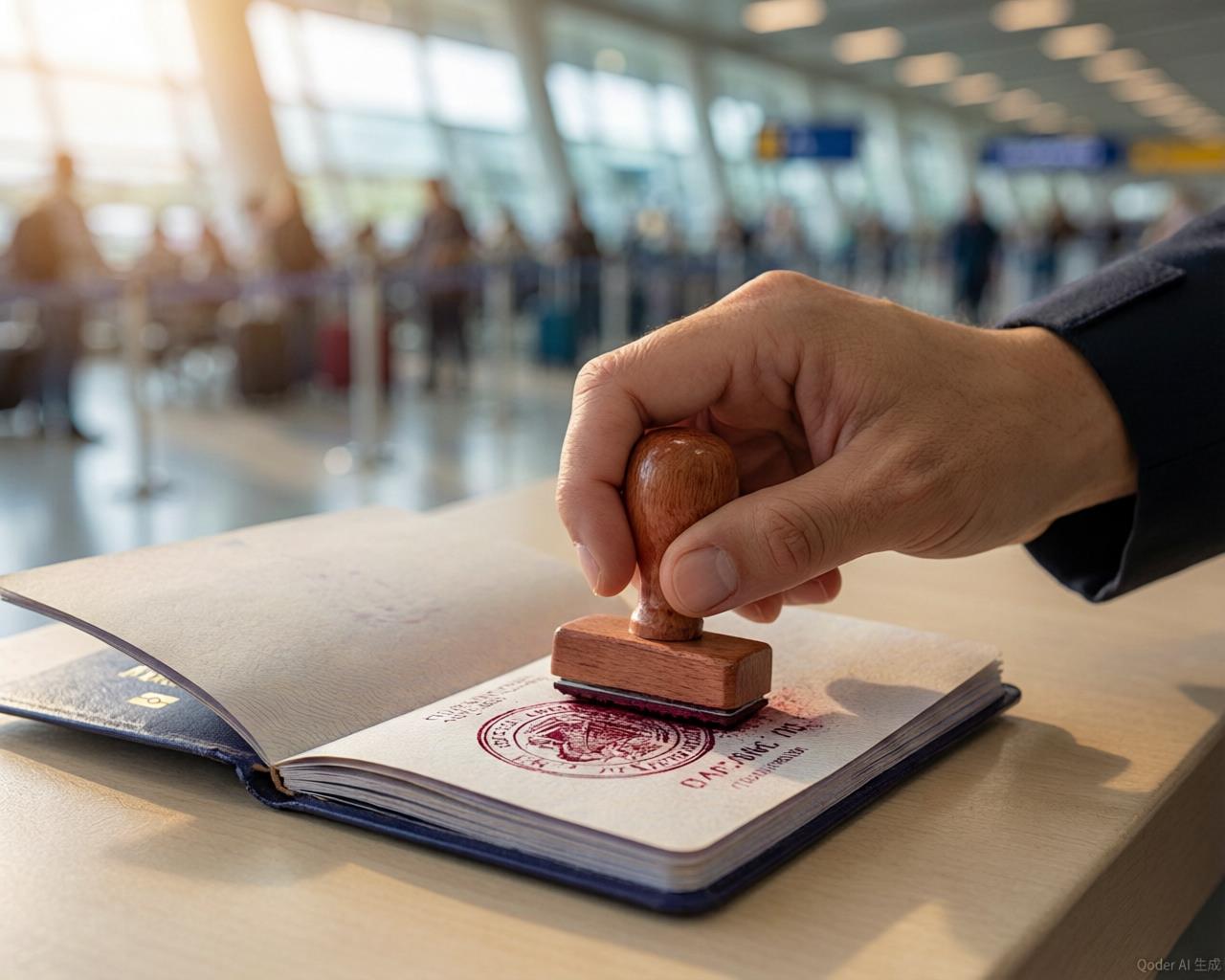
Step 4: Receive your temporary entry permit. The officer will place a sticker or stamp in your passport indicating your permitted stay duration and the region you're allowed to travel in. Check the dates on it before you walk away. If something looks wrong, point it out immediately.
Step 5: Register your accommodation within 24 hours. If you're staying at a hotel, they handle this automatically when you check in. If you're staying with a friend or in an Airbnb-style rental, you (or your host) must register at the local police station (paichusuo, 派出所) within 24 hours of arrival. Hotels do this for you, so this is one less thing to worry about if you're staying in proper accommodation.
Common Mistakes and How to Avoid Them
Mistake 1: Booking a round-trip ticket. This is the number one rejection reason. A round-trip ticket (London-Beijing-London) does not qualify. You need London-Beijing-Tokyo, or London-Beijing-Hong Kong, or any combination where your departure country differs from your arrival country. The fix is simple: book two one-way tickets, or use a multi-city booking tool on your airline's website.
Mistake 2: Miscalculating the 144 hours. Remember: the clock starts at 00:01 the day after arrival, not the moment you land. But also remember you must depart BEFORE the hours expire. If you arrive Monday at 3pm, the clock starts Tuesday 00:01, and you must leave by Sunday 23:59. Build in a safety margin.
Mistake 3: Trying to leave the cluster. "I'm only taking a quick train to see another city" is not a valid defense. The regions are strictly enforced. If you enter through Xi'an, you stay in the Xi'an administrative area. If you want to see multiple clusters, you need separate entries (which means leaving China and re-entering through a different cluster's port).
Mistake 4: Assuming all ports in a cluster accept the policy. Not every airport or train station in a cluster is a designated entry/exit port. Always verify that your specific port of entry and exit are on the official list. The National Immigration Administration website (en.nia.gov.cn) maintains current lists.
Mistake 5: Not printing your onward ticket. While phone screenshots usually work, some airline check-in agents at your departure point (outside China) are stricter than others. A printed confirmation removes all ambiguity. It costs nothing and saves a potential three-hour argument at a check-in counter in Frankfurt or Los Angeles.
Frequently Asked Questions
Can I take domestic flights within the region? Yes, with caveats. Within the Shanghai-Jiangsu-Zhejiang cluster, you can fly Shanghai to Hangzhou or Nanjing. Within Beijing-Tianjin-Hebei, you can fly between those cities. However, some smaller regional airports may not have immigration facilities for the transit permit, so stick to the major designated airports for entry and exit. High-speed rail is often more practical for intra-cluster travel anyway.
What if my onward flight is delayed or cancelled? If your flight is delayed and you're still within the 144 hours, you're fine. If the delay pushes you past the deadline, go to the immigration office at the airport immediately and explain the situation. Force majeure (airline cancellation, medical emergency) is generally handled with a short extension, but you must proactively report it. Do not simply overstay and hope nobody notices.
Can I leave the city cluster? No. Full stop. The policy is region-specific. If you want to visit Beijing AND Shanghai, you need to exit China from one cluster and enter through the other (for example, Beijing to Hong Kong to Shanghai, using two separate 144-hour entries). Some travelers do exactly this and it works, but each entry requires its own qualifying onward ticket.
What counts as a "third country"? Any country or region that is not the one you departed from. Hong Kong, Macau, and Taiwan are treated as separate regions for transit purposes, which makes them extremely popular onward destinations. So a trip like "Seoul to Shanghai to Taipei" qualifies perfectly. A trip like "Seoul to Shanghai to Seoul" does not.
Do I need travel insurance? It's not a formal requirement for the 144-hour transit, but it's strongly recommended. Medical costs for foreigners in China are not subsidized, and a hospital visit can easily run 2,000-5,000 RMB for something minor. Any standard travel insurance policy covering China will suffice.
Important: Immigration policies change. The 144-hour visa-free transit has been expanded multiple times since 2016, and further changes are possible. Before you book anything, verify current eligibility, designated ports, and regional boundaries with your airline, the Chinese embassy or consulate in your country, or the National Immigration Administration website (en.nia.gov.cn). Information in this guide reflects the policy as of mid-2026.
Making the Most of Your 144 Hours
Six days is more than enough for a genuinely rich experience if you plan around your cluster. Here are three proven itineraries that travelers run successfully:
Shanghai-Jiangsu-Zhejiang (the classic): Days 1-2 in Shanghai (the Bund, Yu Garden, French Concession, a Huangpu River night cruise). Day 3: high-speed train to Suzhou (45 minutes) for classical gardens and Pingjiang Road. Days 4-5: Hangzhou (West Lake, Lingyin Temple, Longjing tea plantations). Day 6: back to Shanghai for your onward flight. Total high-speed rail cost: under 200 RMB.
Beijing-Tianjin-Hebei (the history run): Days 1-3 in Beijing (Forbidden City, Temple of Heaven, Great Wall at Mutianyu or Jinshanling, hutong walks). Day 4: day trip to Tianjin (30 minutes by train) for the Italian Quarter and Binhai Library. Days 5-6: either deeper Beijing exploration (798 Art District, Summer Palace, National Museum) or a trip to Chengde. Depart from Beijing or Tianjin.
Guangdong (the food trip): Days 1-2 in Guangzhou (dim sum breakfast crawls, Shamian Island, Chen Clan Academy). Days 3-4 in Shenzhen (Huaqiangbei electronics market, OCT-LOFT creative park, Lianhua Mountain). Day 5: Zhuhai and a view of Macau from the waterfront. Day 6: depart from Shenzhen Bao'an to Hong Kong (a 30-minute ferry or 15-minute flight).
The 144-hour visa-free transit is one of the most underutilized travel tools available. Most travelers from eligible countries don't even know it exists, or they assume the paperwork is complicated. It isn't. You need a passport, an onward ticket, and a plan that stays within the lines. Do those three things and you'll walk out of the airport into one of the most fascinating countries on earth, no visa required.